
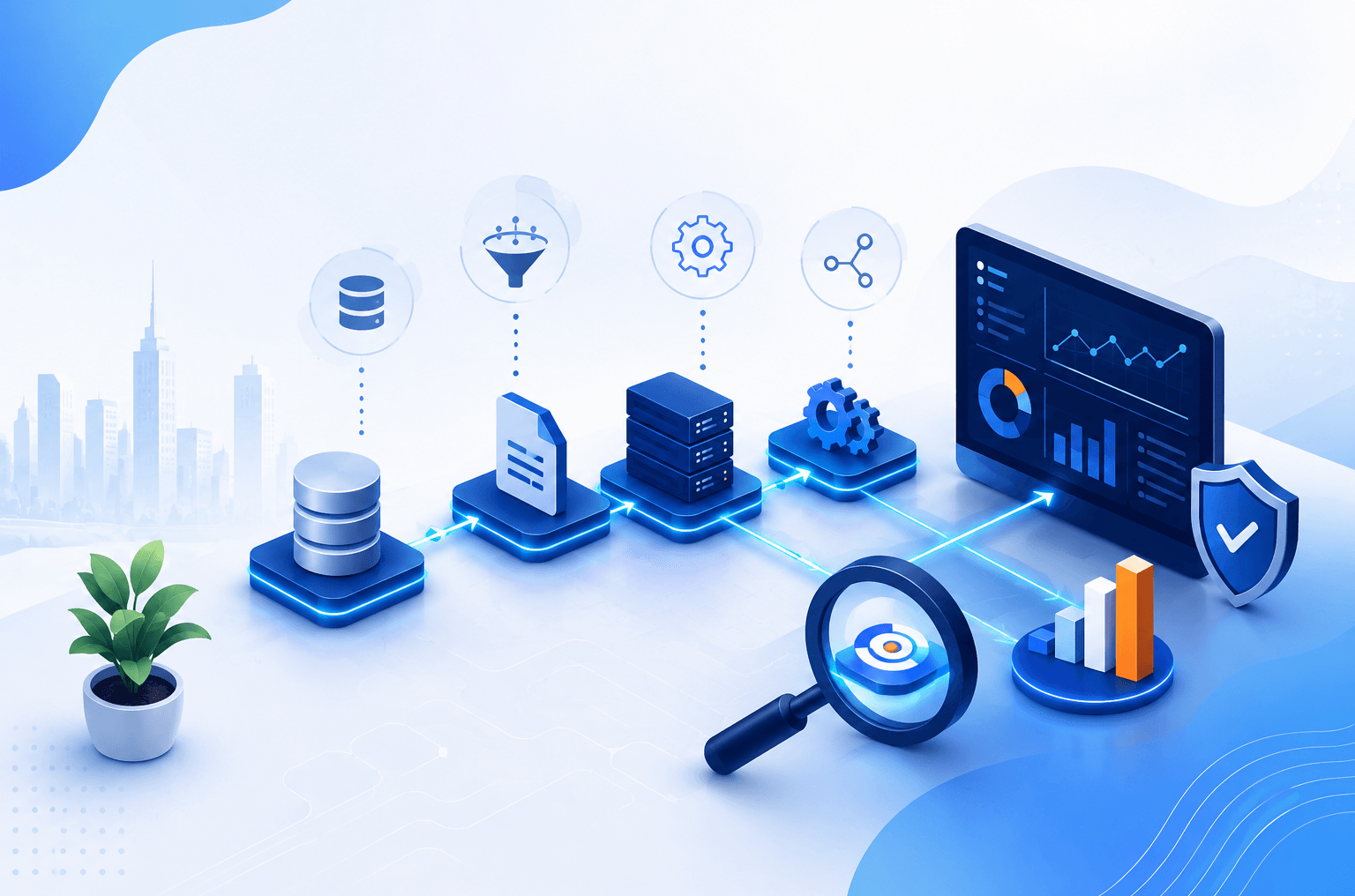
A single data change can break dashboards, reports, and business decisions overnight. Yet many organizations still struggle to understand how their data moves across systems, applications, and analytics platforms.
That is why data lineage has become a critical part of modern data management.
It helps businesses track the complete journey of data — from its source to its final destination.
When combined with impact analysis, organizations gain better visibility into dependencies, transformations, and downstream effects before making changes.
Whether you are improving data governance, migrating to the cloud, or managing enterprise analytics, data lineage helps build trust, accuracy, and operational confidence across your entire data ecosystem.
What Is Data Lineage?
Featured Snippet Definition
Data lineage is the process of tracking how data moves, transforms, and flows across systems, databases, applications, and reports. It helps organizations understand data origins, dependencies, transformations, and usage for better governance, compliance, troubleshooting, and analytics.
Understanding Data Lineage in Simple Terms
Think of data lineage as a GPS system for your data.
It shows:
- Where the data came from
- How the data was transformed
- Which systems use the data
- What reports depend on it
- How changes impact downstream systems
For example, if a sales dashboard shows incorrect revenue numbers, data lineage helps teams trace the issue back to the exact source or transformation step causing the problem.
Why Data Lineage Matters for Businesses
Improving Data Trust and Accuracy
Many organizations struggle with inconsistent reports and unreliable analytics.
Without visibility into data flow, teams waste time identifying the root cause of errors.
Data lineage helps businesses:
- Improve data quality
- Reduce reporting errors
- Increase confidence in analytics
- Eliminate duplicate data issues
- Accelerate troubleshooting
When employees trust the data, decision-making becomes faster and more reliable.
Supporting Data Governance and Compliance
Modern businesses must comply with regulations like:
- GDPR
- HIPAA
- Industry-specific compliance requirements
Data lineage supports data governance by helping organizations:
- Track sensitive data movement
- Maintain audit trails
- Monitor data usage
- Improve security visibility
- Meet compliance standards
This makes governance processes more transparent and manageable.
What Is Impact Analysis?
Understanding Impact Analysis in Data Management
Impact analysis identifies how changes in one dataset, system, or application affect connected business processes and analytics environments.
For example, changing a database column name may impact:
- Dashboards
- Reports
- ETL pipelines
- APIs
- Machine learning models
- Business applications
Without impact analysis, businesses risk:
- System failures
- Broken reports
- Operational disruptions
How Data Lineage Supports Impact Analysis
Understanding Data Dependencies Before Changes
Data lineage provides the visibility needed for accurate impact analysis.
Instead of making changes blindly, organizations can understand:
- Which systems are connected
- Which reports will be affected
- Which teams rely on the data
- Which workflows may fail
This reduces downtime and improves change management processes.
Example Scenario
Imagine a company updating customer information fields inside its CRM platform.
Using data lineage, the organization can identify:
- Connected dashboards
- Data warehouse dependencies
- Marketing automation workflows
- Financial reports
- Customer analytics systems
This helps teams make safe updates without disrupting business operations.
Types of Data Lineage
1. Business Data Lineage
Business data lineage focuses on how information moves across business processes and departments.
It is commonly used by:
- Business analysts
- Compliance teams
- Governance leaders
- Decision-makers
2. Technical Data Lineage
Technical lineage tracks data flow between:
- Databases
- APIs
- Cloud platforms
- ETL pipelines
- Analytics tools
This is especially valuable for IT and engineering teams.
3. Operational Data Lineage
Operational lineage monitors real-time data movement and system activity.
It helps organizations:
- Detect issues quickly
- Improve operational efficiency
- Monitor pipeline performance
- Reduce downtime
Key Benefits of Data Lineage and Impact Analysis
Faster Root Cause Analysis
When data problems occur, teams can quickly trace issues back to the original source.
Better Change Management
Organizations can safely manage:
- Database updates
- Cloud migrations
- Schema modifications
- Application upgrades
- Integration changes
Improved Collaboration Across Teams
Data lineage creates a shared understanding between:
- Business teams
- Data engineers
- IT departments
- Compliance officers
- Analytics teams
Stronger Data Governance
Organizations gain visibility into:
- Data ownership
- Data transformations
- Data usage
- Metadata relationships
- Sensitive information flow
Reduced Operational Risk
Businesses can proactively identify problems before they affect customers or operations.
Common Use Cases of Data Lineage
Cloud Migration Projects
During cloud migration, businesses need visibility into system dependencies and data pipelines.
Data lineage helps ensure:
- Accurate migration planning
- Reduced downtime
- Better dependency mapping
- Safer transitions
Business Intelligence and Reporting
Analytics teams use lineage to understand how KPIs and dashboards are generated.
This improves:
- Reporting accuracy
- Metric consistency
- Trust in analytics
Regulatory Compliance
Organizations can provide audit-ready visibility into sensitive data movement and storage.
Data Quality Management
Lineage helps identify:
- Broken pipelines
- Missing transformations
- Duplicate records
- Inconsistent datasets
AI and Machine Learning
Machine learning systems rely heavily on trusted and traceable data.
Data lineage helps track:
- Training data sources
- Model inputs
- Data transformations
- Feature engineering workflows
Best Practices for Implementing Data Lineage
Start with High-Value Data Assets
Focus first on critical business data such as:
- Customer information
- Financial records
- Compliance-sensitive datasets
- Operational metrics
Automate Lineage Tracking
Manual documentation becomes difficult as data environments grow.
Automated data lineage tools help:
- Improve accuracy
- Reduce manual effort
- Maintain real-time visibility
Integrate with Data Governance Initiatives
Lineage works best when combined with:
- Metadata management
- Data cataloging
- Data observability
- Security policies
- Governance frameworks
Keep Documentation Updated
Outdated lineage information can create confusion and reduce trust.
Regular updates are essential.
Encourage Cross-Team Collaboration
Successful data lineage initiatives require cooperation between business and technical teams.
Challenges in Data Lineage and Impact Analysis
Complex Data Ecosystems
Modern businesses use multiple cloud services, databases, SaaS platforms, and analytics tools.
Tracking data movement across all systems can be challenging.
Lack of Standardization
Different departments often use inconsistent naming conventions and documentation methods.
Rapid Data Growth
As organizations generate more data, maintaining accurate lineage becomes more difficult.
Legacy Systems
Older platforms may lack metadata support or modern integration capabilities.
Despite these challenges, modern lineage tools continue to improve automation and visibility.
Data Lineage Tools and Technologies
Several technologies support automated data lineage and impact analysis.
Popular solution categories include:
- Data catalog platforms
- Metadata management tools
- ETL monitoring systems
- Data governance solutions
- Cloud observability platforms
When evaluating tools, look for features such as:
- Automated lineage mapping
- Real-time monitoring
- Dependency tracking
- Impact analysis dashboards
- API integrations
- Compliance reporting
Future of Data Lineage
AI-Powered Data Intelligence
Artificial intelligence is improving automated lineage discovery and anomaly detection.
Real-Time Data Observability
Organizations increasingly require live visibility into data movement and pipeline health.
Stronger Governance Requirements
As regulations evolve, businesses need deeper transparency and accountability for enterprise data.
Unified Data Ecosystems
Future platforms will combine:
- Data governance
- Data quality
- Observability
- Metadata management
- Analytics visibility
Into a single intelligent ecosystem.
Conclusion
As businesses become more data-driven, visibility into data movement and dependencies is no longer optional.
Organizations need accurate, trusted, and transparent data systems to support:
- Analytics
- Compliance
- Operational efficiency
- Decision-making
By implementing strong data lineage and impact analysis practices, businesses can:
- Improve data governance
- Reduce operational risk
- Accelerate troubleshooting
- Manage system changes with confidence
Whether you are modernizing your analytics infrastructure, migrating to the cloud, or improving data quality, investing in data lineage creates long-term value across the organization.
Now is the time to gain full visibility into your data ecosystem and build a stronger foundation for smarter business decisions.


